
Google Drive
Google Drive generates an estimated $410k–$2.6M/month in revenue from 2.5M–11M downloads/month on the App Store, according to AppCurrents estimates (updated 2026-07-26).
| Est. revenue / month | $410k–$2.6M |
|---|---|
| Est. downloads / month | 2.5M–11M |
| Estimate confidence | low |
| Pricing | Free + IAP |
| Rating | 4.78 ★ (7,684,050 ratings) |
| Category | Productivity |
| Best chart rank | #9 Productivity Free |
| Released | 28.06.2012 |
| App last updated | 20.07.2026 |
| Platform | iOS |
Modeled monthly estimate · rating velocity · low confidence
About
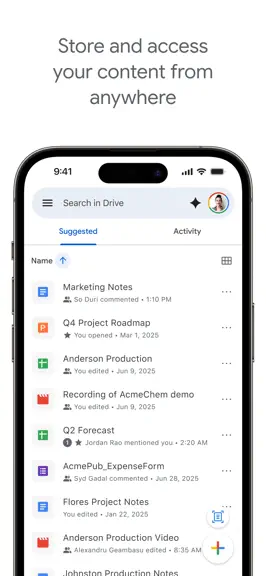
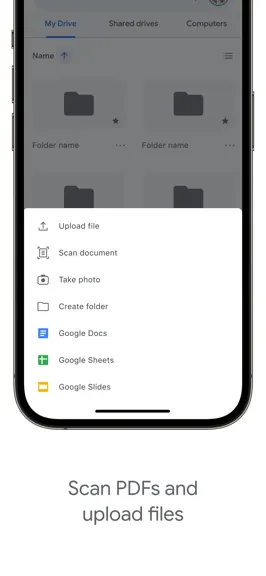
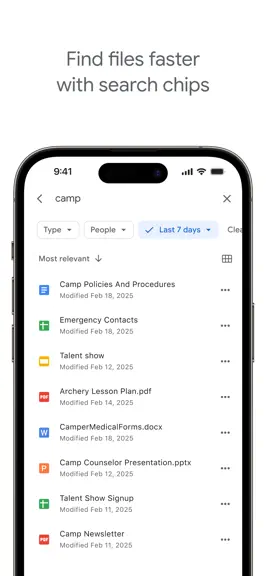
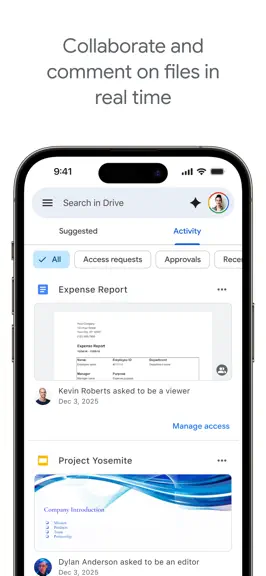
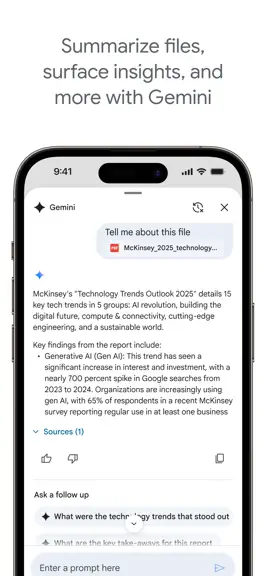
Google Drive lets you securely store, intelligently organize and collaborate on files and folders from anywhere, on any device. With Drive, you can: • Safely store and access your files anywhere • Edit and store 100+ file types, including PDFs, Office files, videos and more • Scan and upload paper documents using your device’s camera • Quickly access recent and important files • Search for files…
Our take on Google Drive
Google Drive is a free cloud-storage app from Google available on the App Store, generating an estimated $3.8M–15M monthly and ranking as high as #10 in US Productivity.
- Reaches an estimated 2.8M–11M monthly downloads with sustained high user engagement—7.6M+ reviews and a 4.78 average rating.
- Monetization spans multiple storage tiers from $1.99 (100 GB) to $9.99 (Google AI Plus at 2 TB), capturing users across price points.
- Charts in 11 countries across both free and paid productivity categories, signaling broad international appeal.
- Review sentiment reveals usability friction—some users report confusion navigating the app, and file-format gaps (e.g., Markdown support) limit its utility for certain workflows.
- Revenue band spans 4x range ($3.8M–15M/mo), reflecting volatility or data uncertainty in monetization.
Trends & analysis
Chart rank trend
US · overallWhy it's surfacing
Scout 44Ratings & velocity
★ 0 in windowRating distribution
95% positive · 7.6M ratingsGeographic reach
best rank · 11 storefrontsRevenue & downloads trend
ARPU $0In-app purchases
4 tiersUpdate history
10 updates tracked- v4.2629.410006d ago
* Bug fixes and performance improvements
- v4.2628.3120013d ago
* Bug fixes and performance improvements
- v4.2627.4140118d ago
* Bug fixes and performance improvements
- v4.2627.4140019d ago
* Bug fixes and performance improvements
- v4.2625.4140526d ago
* Bug fixes and performance improvements
Google Drive — FAQ
How much money does Google Drive make?
According to AppCurrents estimates, Google Drive generates approximately $410k–$2.6M per month (low confidence), modeled from its the App Store chart performance, rating velocity, and monetization signals.
How many downloads does Google Drive get?
Google Drive sees an estimated 2.5M–11M downloads per month on the App Store, per AppCurrents modeling.
Is Google Drive free?
Google Drive is free to download on the App Store, monetizing through in-app purchases.
What is Google Drive's rating?
Google Drive holds a 4.78-star average from 7,684,050 ratings on the App Store. It currently ranks #9 on the Productivity free chart.
When was Google Drive released?
Google Drive launched on the App Store on 28.06.2012. Its latest version shipped 20.07.2026.
What does Google Drive's monetization structure look like?
Google Drive is free to use but offers five primary storage tiers: 100 GB at $1.99, 200 GB at $2.99, and Google AI Plus (2 TB) at $9.99. The 100 GB tier appears three times in the product offering, suggesting it may be the core entry-level upsell.
How established is Google Drive in the Productivity category?
Google Drive has been available since June 28, 2012 (nearly 13 years), making it one of the oldest cloud-storage apps still actively maintained. It currently ranks as high as #10 in US Productivity free, and charts across 11 countries total.
What does Google Drive's download and revenue scale tell you?
An estimated 2.8M–11M monthly downloads and $3.8M–15M in monthly revenue suggest an entrenched but not hyper-scaling product—likely driven by brand affinity and ecosystem lock-in rather than viral growth.


